Solving Cold Cases by Tracing the Offender's Relatives: A Technique That Needs No Record of the Offender's Own DNA
The way most people picture DNA solving a case is this: collect DNA at the scene, compare it against the database of offender profiles the police hold, and if it matches, you have your suspect.
The difficulty is that if the offender has never been arrested before, their DNA was never in that database, and the comparison fails at the first step. This is why a great many cases sit unsolved for decades.
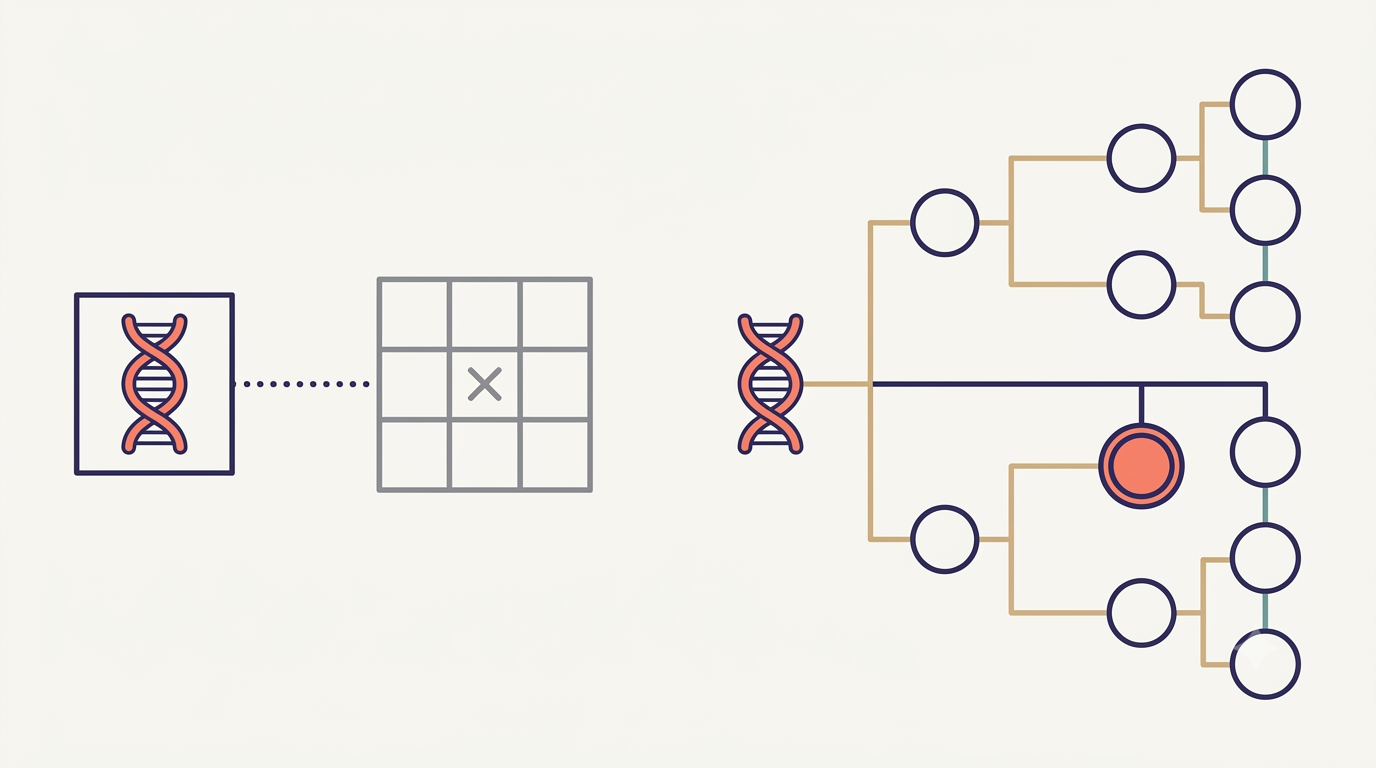
The method known as forensic genetic genealogy turns that logic around. Instead of looking for the offender in a database, it looks for the offender's relatives.
"Even if an offender never sent their DNA anywhere, some of their distant relatives may have."
Once it is established which people are genetically related to the DNA found at the scene, investigators build a family tree, then narrow it down using other information such as sex, age and where a person was living at the time of the offence, until only a small number of plausible candidates remain.
How the Process Actually Works
The Forensic Technology Center of Excellence, under the United States National Institute of Justice, sets out the steps.
First, the police database must always be searched first. The document states that searching DNA profiles against the FBI's Combined DNA Index System, known as CODIS, is a critical first step toward finding investigative leads, but that these searches may not always yield probative matches.
Second, when that search comes back empty, forensic science service providers may turn to forensic genetic genealogy, which requires a different and far denser form of DNA data known as a single nucleotide polymorphism profile, or SNP profile.
A practical point worth noting is that the document records that many laboratories lack the capacity to generate such a profile, which is why the Department of Justice policy identifies third-party vendors as an option to generate the SNP profile and provide genealogical analysis support.
Third, that profile is uploaded to genetic databases specifically open to law enforcement, to be compared against the profiles of people who have consented to their data being used. The similarities found help identify individuals related to the sample of interest, creating investigative leads.
The final step is the most important. The document states that those leads are confirmed with additional STR analysis, the standard form of forensic DNA testing used in court. Put simply, forensic genetic genealogy can only point in a direction. Identifying a person still requires the conventional method.
Source: https://www.ojp.gov/pdffiles1/nij/grants/305203.pdf
The Rules Governing Forensic Genetic Genealogy
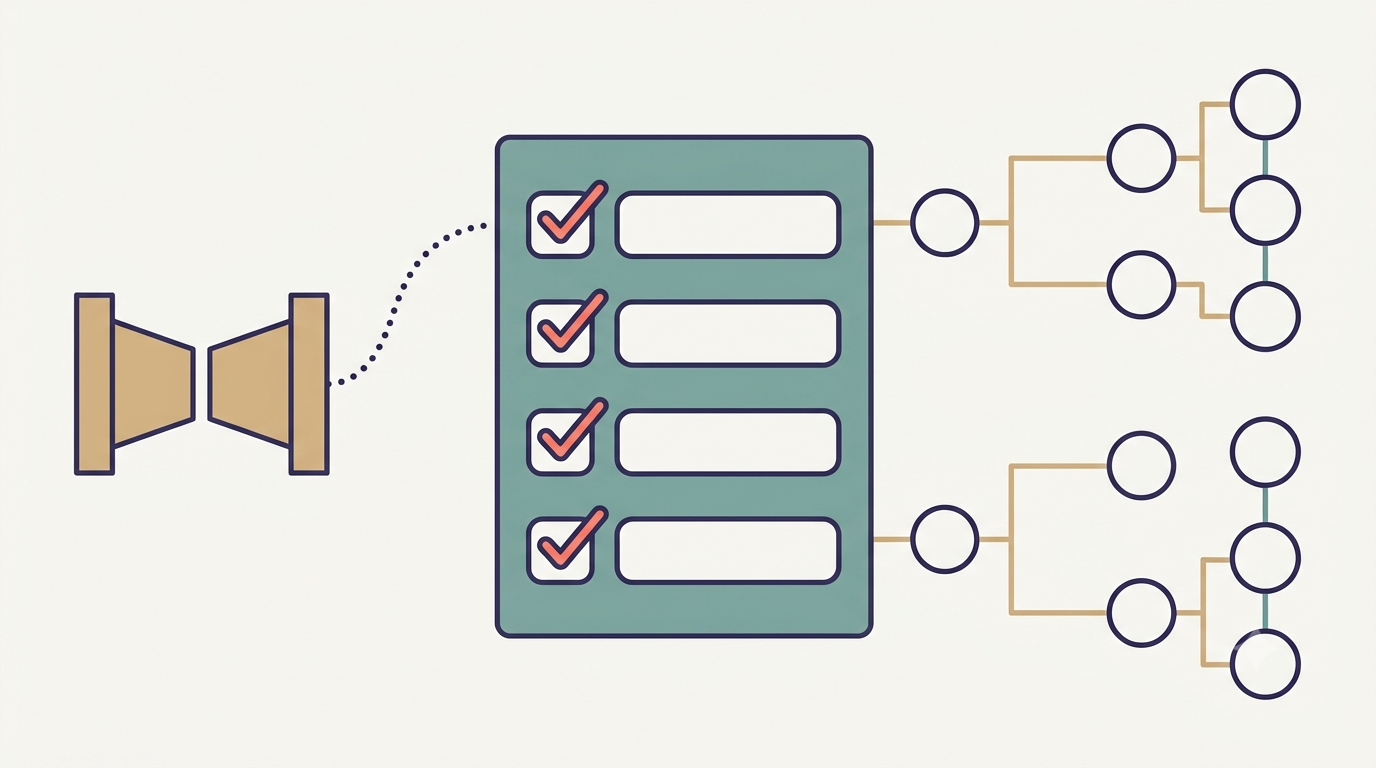
Forensic genetic genealogy is a powerful instrument, and it comes with strict rules. The United States Department of Justice issued a document titled the Interim Policy on Forensic Genetic Genealogical DNA Analysis and Searching, approved on 2 September 2019 and effective from 1 November 2019. Its main provisions are these.
First, the resulting data must never enter the police database. The policy states that information and data derived from this process is not, and cannot be, uploaded, searched, or retained in any CODIS DNA Index.
Second, it may be used only for certain categories of case. The policy permits its use where a case involves an unsolved violent crime and the sample is believed to be from the perpetrator, or where a case involves what is reasonably believed to be the unidentified remains of a suspected homicide victim. It defines violent crime as any homicide or sex crime.
Third, the police database must have been searched without result first. The policy requires that before the method may be attempted, the forensic profile must have been uploaded to CODIS, and subsequent CODIS searches must have failed to produce a probative and confirmed DNA match.
Fourth, investigators must identify themselves and choose the right database. The policy requires agencies to identify themselves as law enforcement, and to search only in those services that provide explicit notice to their users and to the public that law enforcement may use their sites to investigate crimes or identify unidentified human remains.
Fifth, no arrest may rest on this method alone. The policy states that a suspect shall not be arrested based solely on a genetic association generated by a genealogy service, and that once a suspect is identified, STR DNA typing must be performed and compared directly against the forensic profile previously uploaded to CODIS.
Sixth, third parties must be asked for consent. The policy requires an agency to seek informed consent from third parties before collecting reference samples, unless it concludes that case-specific circumstances provide reasonable grounds to believe that the request would compromise the integrity of the investigation.
That last provision points to the largest ethical question the method raises. Most of the people drawn into a family tree never consented to anything. They are simply relatives of somebody who once sent off a DNA sample because they wanted to know where their ancestors came from.
Source: https://www.justice.gov/olp/page/file/1204386/dl
Where Thailand Stands
A study published in Science and Technology Asia in 2025, co-authored by researchers from the Central Institute of Forensic Science at the Ministry of Justice, sets out Thailand's position plainly.
It records that although Thailand has not yet established a national DNA database, the criminal justice system has successfully used DNA evidence in important criminal cases.
The major obstacles it identifies are the absence of a law to establish a central agency to administer a national DNA database, and the fact that the absence of a central authority for collecting DNA biometric data results in disparate management of DNA databases and a lack of coordination between agencies.
The study also raises a rights problem. It records that DNA retention is case-based and follows police regulation, but lacks legal safeguards regarding the collection, storage and deletion of personal data, which it warns can lead to the lifelong treatment of innocent people as criminal suspects, and to violations of individual rights and privacy.
On what is moving, the study records that Thailand has signed a Memorandum of Understanding with the United States to use the CODIS software system, and that Thailand must amend regulations regarding the authority of government officers to collect DNA samples from the accused or defendant in criminal cases in order to establish a national DNA database.
Source: https://ph02.tci-thaijo.org/index.php/SciTechAsia/article/view/255916
Lessons for Thailand
First, debating forensic genetic genealogy is not yet Thailand's immediate problem, because the infrastructure that comes before it, a national DNA database, still has no law authorising its establishment.
Second, the order of operations matters. The United States policy requires the police database to be searched first, with genealogy used only when that search fails. That sequence works only if the police database exists and is broad enough to be worth searching.
Third, having a database does not make it safe on its own. Thailand's own study points out that the present problem is not merely the absence of a central database, but the absence of rules on collection, retention and deletion, which have to be designed at the same time rather than considered afterwards.
Fourth, the lesson from the American rules can be applied now, even without the technology. It consists of deciding in advance which methods may be used for which categories of case, what must be done first, and that no arrest may rest on such a method alone. Writing the rules before the tool arrives is far easier than writing them in pursuit of it.
Finally, a point that concerns everyone. When a person sends off a sample to learn where their ancestors came from, what they hand over is not only information about themselves. It is information that says something about every relative connected to them. That is the fact which sets genetic data apart from every other kind of personal data.
References
Forensic Technology Center of Excellence. (2022). An introduction to forensic genetic genealogy technology for forensic science service providers. National Institute of Justice, Office of Investigative and Forensic Sciences. https://www.ojp.gov/pdffiles1/nij/grants/305203.pdf
U.S. Department of Justice. (2019). Interim policy: Forensic genetic genealogical DNA analysis and searching. https://www.justice.gov/olp/page/file/1204386/dl
Worasuwannarak, W., et al. (2025). DNA database and forensic DNA analysis in Thailand. Science and Technology Asia, 30(2). https://ph02.tci-thaijo.org/index.php/SciTechAsia/article/view/255916
Good knowledge should not stay in the library. It should be used to build a safer world.
Follow us at www.crimesci.com
Contact info@crimesci.com
#HubofKnowledge #CenterforCrimeScience #CrimeScienceWeekly
#วิทยาการอาชญากรรม #ดีเอ็นเอ #นิติวิทยาศาสตร์ #ForensicGeneticGenealogy