Tiger Skins on Sale in a Souvenir Shop: Wildlife Trade in the Golden Triangle Special Economic Zone
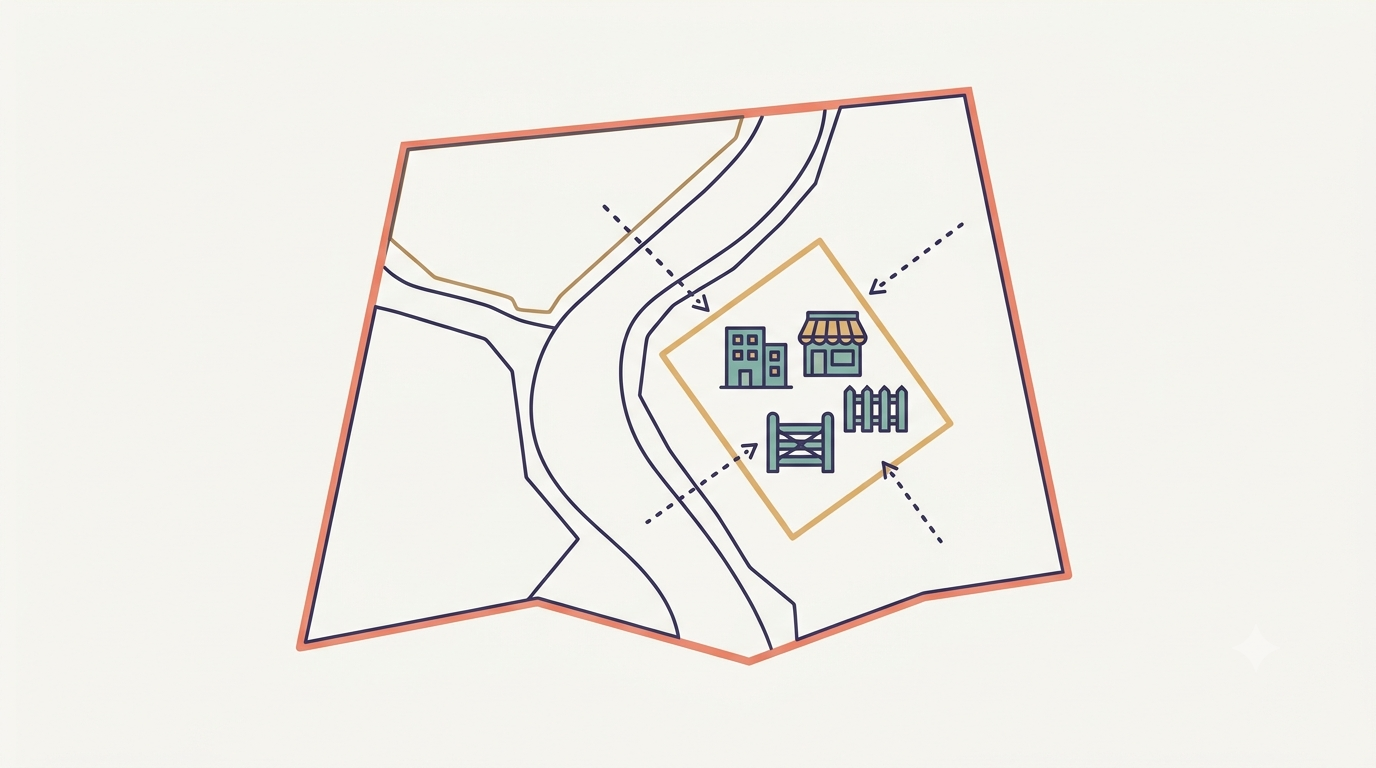
Across the Mekong from Chiang Saen district in Chiang Rai province, on the Lao bank, lies an area called the Golden Triangle Special Economic Zone.
A special economic zone is normally an area a state sets aside and grants tax and investment privileges, in order to draw foreign capital into a place that has not yet developed. In this case the terms went considerably further than that.
In 2007 Kings Romans Group, a Hong Kong-registered company, signed an agreement with the Lao government for a 99-year lease on a 10,000 hectare concession in Ton Pheung district, Bokeo province. Within that concession, 3,000 hectares were designated a duty-free zone, which is the Golden Triangle Special Economic Zone.
What sets this place apart is who holds the running of it. The report by the Environmental Investigation Agency records that despite being part of Lao territory, the zone is run by the Chinese company, which holds an 80 per cent stake in the operation along with that 99-year lease, while the Lao government is reported to hold the remaining 20 per cent.
The casino opened in 2009, followed by a shopping and restaurant area known as Chinatown in 2013. It was in that area that investigators found what became the substance of this report.
"A small haven for wildlife crime."
Source: https://eia-international.org/wp-content/uploads/EIA-Sin-City-FINAL-med-res.pdf
What Investigators Found in the Souvenir Shops
The Environmental Investigation Agency, working with Education for Nature Vietnam, sent a team into the zone in June 2014 and returned in February 2015. Their report, titled Sin City, was published in March 2015.
In one gift shop, investigators found seven tiger skins, four stuffed tigers, bottles and jars of tiger bone wine, a leopard skin, two ivory tusks and numerous carvings, shavings of what was marketed as rhino horn, pangolin scales and carvings from helmeted hornbills.
One restaurant advertised sauté tiger meat and tiger bone wine in English and Mandarin on the menu board outside. Visible from the street was a tank of wine labelled tiger bone wine, containing a near-complete big cat skeleton.
Another restaurant offered a range of wild meat dishes: bear paw, monitor lizard, pangolin, Tokay gecko, snake and turtle. Investigators observed a live python and a bear cub kept in cages by the restaurant entrance and the kitchen exit respectively, both of which were available to eat on request.
Inside the casino, on the periphery of the gaming floor, investigators observed shelves full of ivory products, including carved whole tusks, bangles, beaded bracelets, pendants and other trinkets.
At the zone's zoo, a short walk from the casino, 26 tigers and 38 Asiatic black bears were on display during the site visits. The head keeper said the plan was to acquire a total of 50 females for breeding, with the aim of producing 500 tigers within three years and up to 1,000 tigers in the long term.
Source: https://eia-international.org/wp-content/uploads/EIA-Sin-City-FINAL-med-res.pdf
Much of the Merchandise Originated in or Passed Through Thailand
The same report records that many of the goods on sale in the zone did not come from Laos, but originated in or were trafficked through Thailand. It sets out three main points.
The first is ivory. Investigators found a pack described as ivory powder, often residue from the ivory carving process, with a label bearing Thai language characters, and one of the retailers confirmed that the products were carved in Thailand and trafficked across to Laos.
The second is tiger skins. Traders in the zone stated that six of the tiger skins for sale had been trafficked from Thailand and Malaysia via Mong La in Myanmar.
The third is live tigers. The report records that live tigers are trafficked into Laos from Thailand to stock tiger farms there, which in turn sell tiger parts and products on to Chinese and Vietnamese consumers.
The report also documents seizures on the Thai side, which indicate the route has been in continuous use. In 2008 Thai authorities intercepted a consignment of six tiger carcasses, three leopard carcasses and two clouded leopard carcasses, along with 275 pangolins. In 2013, sixteen tiger cubs were seized from a vehicle believed to be one of three travelling in convoy to Laos.
Source: https://eia-international.org/wp-content/uploads/EIA-Sin-City-FINAL-med-res.pdf
US Sanctions, With a Thai Company on the List
On 30 January 2018 the United States Department of the Treasury, through its Office of Foreign Assets Control, designated the Zhao Wei Transnational Criminal Organization.
The statement records that the organisation is based in Laos within the Golden Triangle Special Economic Zone, and exploits the region by engaging in drug trafficking, human trafficking, money laundering, bribery and wildlife trafficking, much of which is facilitated through the Kings Romans Casino located within the zone.
On wildlife specifically, the statement records that the organisation engages in wildlife trafficking of endangered and vulnerable animals, including Asiatic black bears, pangolin, tigers, rhinos and elephants.
The designation covered four individuals and three entities across three jurisdictions: Laos, Thailand and Hong Kong. Among them was a Thai national who is a director of King Romans Company Limited, a company itself registered in Thailand.
Source: https://home.treasury.gov/news/press-releases/sm0272
Did the Wildlife Trade Stop After the Sanctions

The most important question here is whether the wildlife trade in this place stopped once the sanctions were imposed.
A study conducted on the ground after the sanctions, published in Frontiers in Conservation Science in 2022 and based on field visits in 2017 and 2019, concluded that the illegal trade in wildlife in the Golden Triangle Special Economic Zone is still present but occurs more covertly than previously observed, having transformed underground to online social media.
Put simply, it did not stop. It changed form.
The goods still openly on sale and counted by the researchers across those two visits were 26 and 29 tiger bone wines respectively, 21 and 12 tiger teeth, and 67 and 31 ivory pieces.
Two casino employees who were interviewed explained that this had been the case since the US sanctions, but that both wildlife and drugs are still provided on request.
One trader explained that his store had been raided by Lao police, so he had relocated slightly outside the Chinatown centre. At the new shop he acknowledged that he still trades under the counter in rhino horn and tiger products among other illegal wildlife, and that customers learn of this through his WeChat account.
As for live animals, the researchers recorded 27 tigers and 36 bears in 2017. By 2019 the bears and their cages had been moved to a different area, but 25 tigers were still present.
Source: https://www.frontiersin.org/articles/10.3389/fcosc.2022.1030378/full
Lessons for Thailand
The first thing to state clearly is that Thailand is directly involved in this story: as a source of carved ivory, as an origin for tiger skins and live tigers, and as a country whose company and whose national appear on the United States sanctions list.
The second is a methodological lesson. This case shows that the strongest measure available, financial sanctions imposed by a major power, still did not bring the wildlife trade to a halt. What it achieved was to move the goods from the shelf to under the counter, with sales arranged through a messaging app instead.
That creates a new problem for enforcement, because when goods are no longer on display, inspection by walking into a shop no longer works. Surveillance has to shift to communication channels and financial trails instead.
The last point belongs to consumers. A market like this survives because someone buys. An unusual souvenir in a shop near the border may be part of an animal hunted on another continent. Declining to buy is a crime prevention measure anyone can take immediately, without waiting for anyone else.
References
Environmental Investigation Agency. (2015). Sin City: Illegal wildlife trade in Laos' Golden Triangle Special Economic Zone. https://eia-international.org/wp-content/uploads/EIA-Sin-City-FINAL-med-res.pdf
U.S. Department of the Treasury. (2018, January 30). Treasury sanctions the Zhao Wei Transnational Criminal Organization. https://home.treasury.gov/news/press-releases/sm0272
van Uhm, D. P., & Zhang, Y. (2022). Wildlife trafficking in the Golden Triangle. Frontiers in Conservation Science, 3, Article 1030378. https://www.frontiersin.org/articles/10.3389/fcosc.2022.1030378/full
Good knowledge should not stay in the library. It should be used to build a safer world.
Follow us at www.crimesci.com
Contact info@crimesci.com
#HubofKnowledge #CenterforCrimeScience #CrimeScienceWeekly
#วิทยาการอาชญากรรม #ค้าสัตว์ป่า #สามเหลี่ยมทองคำ #WildlifeCrime