eDNA: A Technology for Tracing Genetic Material from the Environment
In the world of forensic science, identifying individuals through biological evidence—such as fingerprints, latent prints, blood, saliva, hair, or other bodily fluids—is a key method widely accepted in the justice system. These forms of evidence are essential in linking individuals to crime scenes, identifying suspects or victims, and establishing physical presence. Their power lies in the uniqueness of genetic information, allowing for accurate DNA profiling.
However, in complex cases or adverse environments, such evidence can be difficult to locate. For instance, suspects may wear gloves, clean the crime scene to destroy traces, or commit crimes in open or humid environments where DNA may degrade quickly. These limitations have led scientists and criminologists to seek new ways of detecting biological presence—even in the absence of direct, visible evidence.
One of the most groundbreaking developments in recent years is the use of 'Environmental DNA' (eDNA) to identify individuals who were once present at a particular location.
What is Environmental DNA (eDNA)?
eDNA refers to genetic material shed naturally from living organisms into the environment—through skin cells, saliva, hair, or micro-DNA particles emitted during breathing, speaking, or even walking. Historically, eDNA has been used in ecology to detect the presence of animals or plants in specific areas without needing direct observation. For example, detecting whales in the ocean by collecting water samples containing their genetic traces.
Today, eDNA technology has evolved even further. Scientists can now detect DNA particles floating in the air, known as 'airborne eDNA'. This advancement marks a major leap in forensic science, opening up new possibilities for identifying individuals in locations where no blood, physical contact, or visible trace remains. Even when a suspect meticulously avoids leaving evidence, airborne eDNA may still linger in the environment.
Source: Smithsonian Magazine (2023)
The Accidental Discovery of Human eDNA
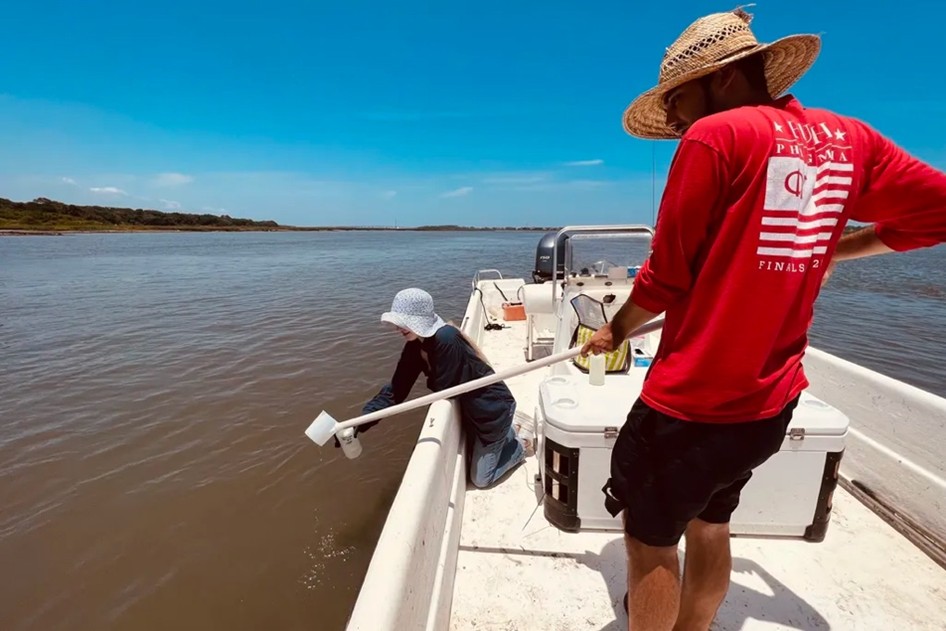
In 2023, researchers from the University of Florida discovered that human eDNA could be collected from air, sand, and water. Initially, their goal was to study sea turtles by collecting eDNA from their footprints to investigate a virus affecting the turtles. They expected incidental traces of other species, possibly including humans, but did not anticipate the level of human genetic detail they uncovered.
The team collected samples from rivers, oceans, and beaches across Florida, as well as from remote islands with little or no human activity. Analysis using Whole-Genome Shotgun Sequencing revealed human DNA in all populated sample sites, except for the remote island. The data contained detailed human genetic markers, such as haplogroups, disease-related mutations, and genetic indicators for heart disease, diabetes, and autism. The findings also matched local population characteristics—proving that human eDNA can be purposefully collected using ecological methods.
The Benefits and Concerns of eDNA Technology
eDNA offers significant advantages—for example, allowing conservation biologists to monitor endangered species without disturbing them, or tracking disease spread in wastewater, such as for COVID-19. However, scientists are increasingly concerned about its ability to identify human presence without direct physical evidence. This raises the risk of misuse.
Despite being a scientific breakthrough, airborne eDNA also presents serious ethical questions—especially regarding personal privacy. One major concern is collecting human eDNA in public spaces without individuals' knowledge or consent. If state agencies or organizations deploy this technology without transparency, it could be misused for mass surveillance, identifying protestors, or unauthorized political control. For example, reports have documented the Chinese government collecting DNA from Tibetan and Uyghur ethnic groups—prompting international criticism that similar methods could be abused in the future.
As a result, some countries have begun discussing the need for new legal frameworks to regulate eDNA, in parallel with existing genetic privacy laws that govern databases of human genomic data.
The Future of eDNA in Forensic Science
In modern forensics, DNA found at crime scenes is already used to generate facial composites of suspects. Airborne eDNA could potentially be used in similar ways. Although the mechanisms of eDNA dispersal and degradation are still not fully understood, this technology represents a major leap forward—especially airborne eDNA, which may enable the identification of individuals simply from the air they breathed.
Nevertheless, deploying this technology in real-world contexts requires careful legal, policy, and ethical frameworks to prevent the violation of fundamental rights. If appropriately regulated, eDNA could become a powerful tool for solving complex cases and enhancing fairness and precision in the justice system.
References:
Smithsonian Magazine (2023). Scientists Can Now Pull Human DNA From Air and Water, Raising Privacy Questions.https://www.smithsonianmag.com/smart-news/scientists-can-now-pull-human-dna-from-the-air-and-water-raising-privacy-questions-180982192/
Whitmore, L., McCauley, M., Farrell, J. A., Stammnitz, M. R., Koda, S. A., Mashkour, N., Summers, V., Osborne, T., Whilde, J., & Duffy, D. J. (2023). Inadvertent human genomic bycatch and intentional capture raise beneficial applications and ethical concerns with environmental DNA. Nature Ecology & Evolution, 7(6), 873–888. https://doi.org/10.1038/s41559-023-02056-2