At the MHESI Fair 2025: SCI Power for Future Thailand, Ms. Suchaya Moksasen, Border Management Programme Officer at the United Nations Office on Drugs and Crime (UNODC ROSEAP), delivered a lecture titled “The Role of Border Management in the Era of Crime Convergence.” She highlighted the increasing risks at Southeast Asia’s borders, which have become intersections for multiple types of crime, and proposed integrated approaches to border management in response.

Ms. Suchaya explained that border areas in the region are geographically complex, often constrained by weak state governance, overlapping jurisdictions, special economic zones, and “lawless areas.” These vulnerabilities, coupled with the exploitation of cheap labor in human trafficking networks and infrastructure that facilitates money laundering, have created a “perfect storm” of conditions enabling crime convergence. She pointed to the Golden Triangle as a vivid example, where the expansion of casinos in special economic zones, infrastructure development—both official and underground—and trafficking routes channel the production of illicit drugs into global markets. Rising seizures of methamphetamine and synthetic substances, alongside the resurgence of opium cultivation linked to the global heroin trade, further illustrate this convergence.
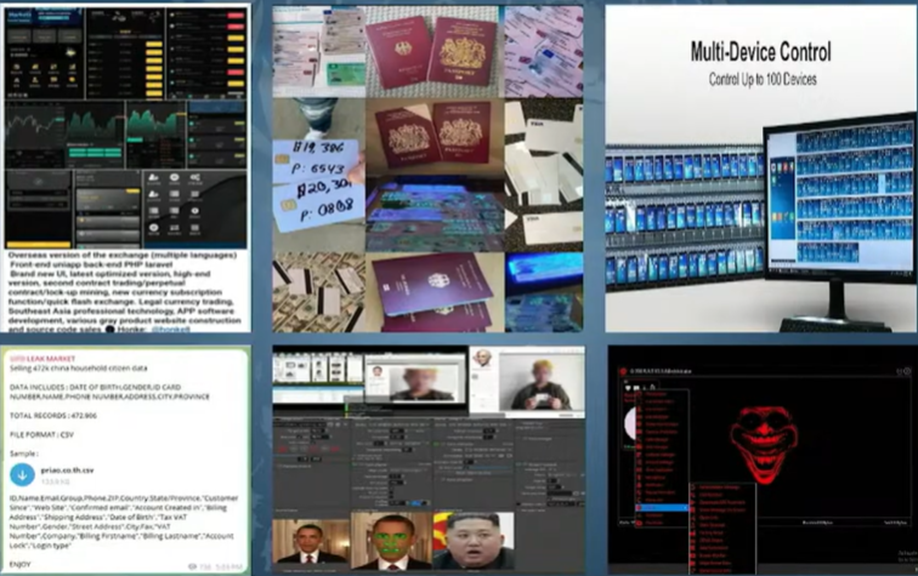
A critical shift in recent years, she noted, is the integration of scam centers, underground banking systems, and online black markets across Southeast Asia—phenomena with global implications. The 2025 UNODC report highlights how these developments have fueled the worldwide spread of harms and deepened the infiltration of organized crime into the legitimate economy. In the field of cybercrime, she stressed that East and Southeast Asia suffered losses exceeding 1.3 trillion baht in 2023 from online scams alone. These range from illegal gambling, “pig-butchering” investment scams, pyramid schemes, and impersonation frauds, to deceptive work-from-home offers—underscoring the rapid expansion of scams and cybercrime. She also described how underground banking and money laundering are evolving into full-fledged “services,” with organized crime groups investing in casinos, online gambling, cryptocurrency, and blockchain-based businesses to launder illicit proceeds within minutes, while attracting transnational criminal actors into the region.
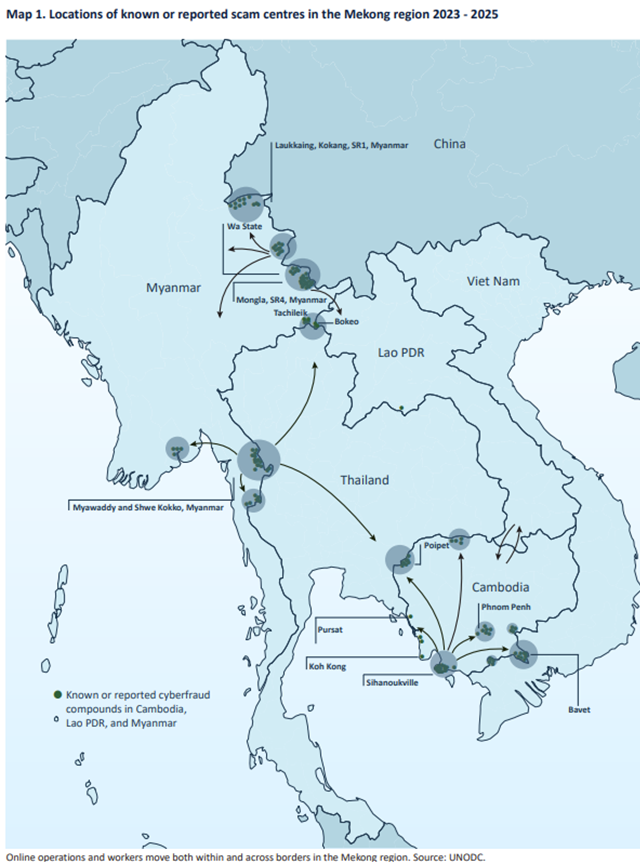
Another key dimension is human trafficking for forced criminality. Many victims are deceived with promises of well-paid jobs abroad, only to have their passports confiscated, be confined, and coerced into running online scams. Those failing to meet quotas or attempting escape face violence or punishment. As a result, both perpetrators and victims are trapped within this exploitative system. Victims from over 56 countries worldwide have been identified in scam compounds across Southeast Asia.
For solutions, Ms. Suchaya proposed a layered approach to border management:
Shared Interests – Building common incentives for cooperation, since borders are not merely dividing lines but “living communities.” Border governance must be people-centered.
Border Management Actions – Strengthening community-based surveillance networks, integrating local intelligence into law enforcement, conducting joint inspections at checkpoints, screening trafficking indicators, and patrolling land, river, and air borders. Proactive strategies include village alert systems, public signboards, loudspeaker announcements, as well as specialized training for airline staff and port officials to detect trafficking. She also recommended tailored community engagement—through social media platforms like Facebook and TikTok, peer-to-peer education, and youth-focused initiatives—to build social resilience against criminal recruitment.
Regional and Diplomatic Tools – Leveraging frameworks such as the ASEAN Border Management Program, the Border Liaison Office (BLO) network (with over 120 offices across six countries), and the relevant UN and ASEAN conventions on counter-trafficking.
She emphasized that long-term prevention and resilience are essential, particularly through alternative livelihoods in vulnerable border communities. The 2023 UNODC survey revealed that 83% of respondents in Thai border communities identified economic factors as the primary driver of drug trafficking and illicit trade. Thus, investment in sustainable livelihoods is critical to breaking cycles of crime.

Ms. Suchaya concluded that border management in the era of crime convergence is not merely about fences or checkpoints—it requires comprehensive mechanisms that engage communities, local authorities, national governments, and regional cooperation to address interconnected risks. She underscored: “Strong borders are the foundation of regional security.”