Designing the Opportunity Out of Public Transport Harassment
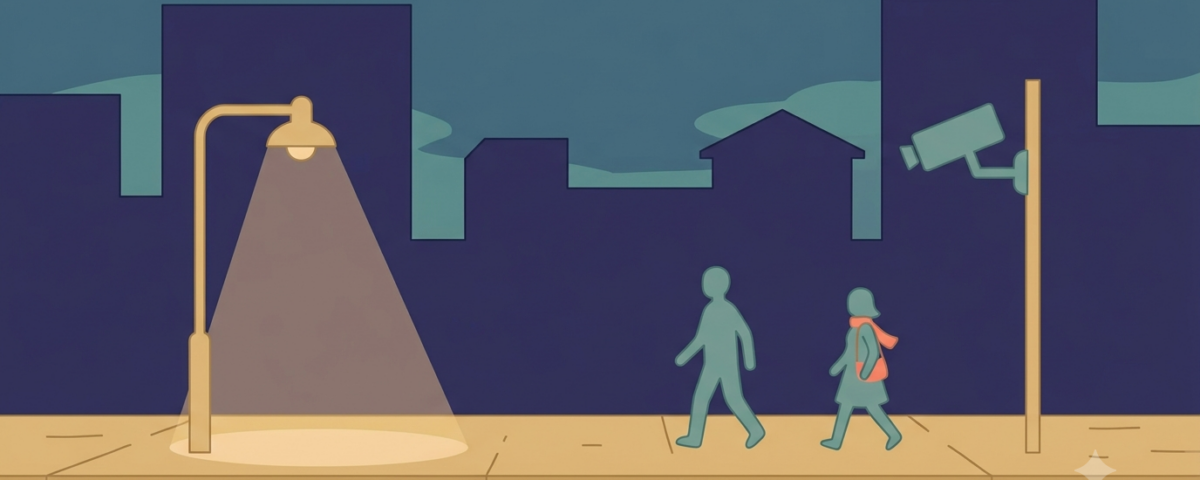
When we fit a steering lock to a car, we are not trying to change a thief's character. We are making that particular car enough trouble that they walk past it and look at the next one.
This idea has a name in the research literature: situational crime prevention, developed by Ronald Clarke. It argues that a great deal of crime happens because an opportunity is sitting open at that moment, rather than because society has waited too long to turn someone into a better person.
"Close off the opportunity and a share of offences never happens, without waiting for anyone to change their character."
Clarke's framework organises 25 practical techniques under five aims: increase the effort required, increase the risk of being caught, reduce the rewards, reduce provocations, and remove excuses.
Apply those five to groping on a bus or a train and the picture becomes concrete. Increasing the effort means carriage layout and crowd management that leave no corner where an offender can press against a passenger unseen. Increasing the risk means placing cameras and staff where they genuinely deter rather than merely record for later. Reducing the rewards means one-touch reporting that raises the chance of being caught in the act. Removing excuses means rules and signage that retire the defence that the vehicle was simply too crowded.
Source: https://popcenter.asu.edu/content/situational-crime-prevention
The Data from Bangkok
The Safe Cities for Women campaign, through Thammasat University's Faculty of Public Health, surveyed 1,654 users of public transport in Bangkok. It found that 35 percent had been sexually harassed on the transit system, and that 35 percent had seen someone else being harassed in front of them.
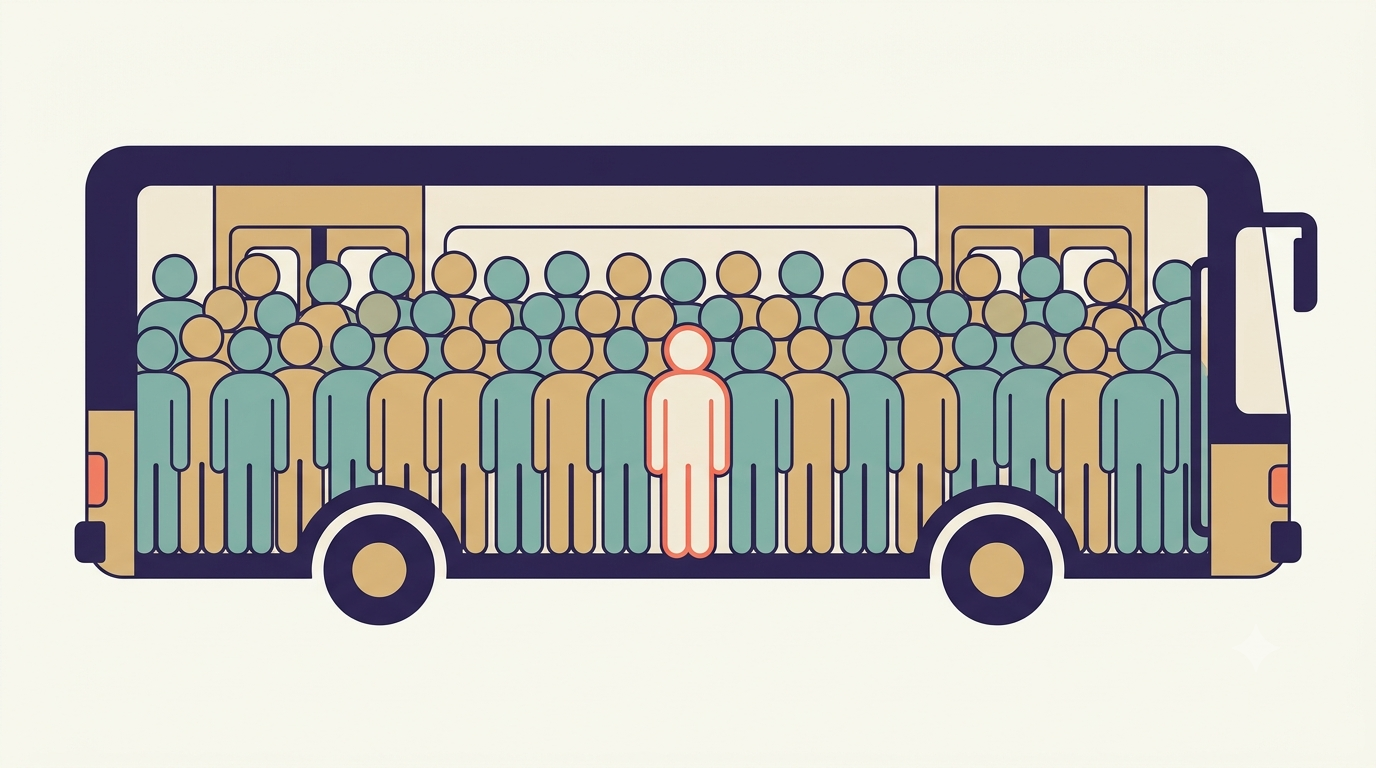
The finding many people do not expect is that the most cited location was the ordinary city bus, which the survey team attributed to the sheer density of passengers, with incidents clustering in the rush hour.
The figure worth reading alongside that is the share who witnessed an incident. When a third of passengers have seen an offence happen in front of them, there is already an enormous quantity of attention inside the system. What is missing is a channel that turns that attention into deterrence.
Source: https://www.nationthailand.com/in-focus/30332196
Women-Only Carriages Help Inside the Car, at a Price
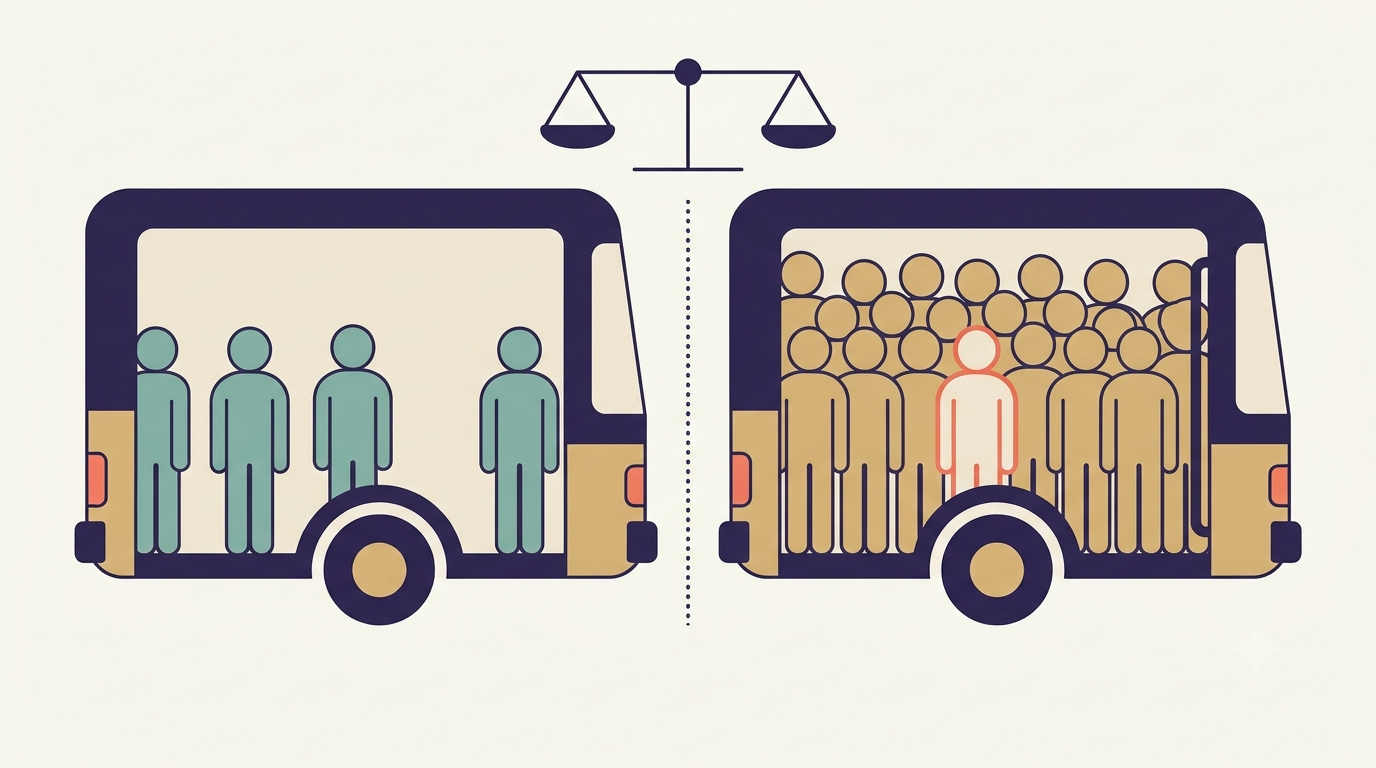
The measure most people think of first is reserving a carriage for women. It has research behind it, and the result has two sides.
A field experiment in Rio de Janeiro, Brazil, by Florence Kondylis and colleagues found that women randomly assigned to the mixed public carriage were harassed on 18 percent of their trips, with physical harassment on 2.6 percent of trips, and that reserving a carriage for women did reduce harassment inside that space.
The same study nonetheless calls the measure a second-best solution. It does not touch the root cause, which is the behaviour of offenders, and it entrenches a harmful norm: most of the men and women in the study held the view that a woman who chooses the mixed carriage is more sexually open or more inviting of trouble.
Put plainly, the measure moves the burden of safety onto women, who are then expected to pick the right carriage. It belongs alongside measures aimed squarely at the offender, not in place of them.
Source: https://voxdev.org/topic/infrastructure/demand-safe-space-how-women-only-transit-cars-reduced-harassment-while
Lessons for Thailand
First, do not assume where the risk is. The survey points at the bus rather than the modern rail stations. Spending the budget on stations because the results photograph well risks missing where the problem actually sits.
Second, this data is system-wide. There is no separate, reliable statistic for the BTS or the MRT on its own, and the survey itself is several years old. Designing serious measures has to begin with a fresh assessment of where incidents happen now, at what hours, and in what form.
Third, start with the cheapest thing that works. A reporting channel that is one touch away and staffed by someone who actually responds costs far less than fitting hardware across an entire network, and it speaks directly to the problem of silence.
What this way of thinking tells us is that safety on public transport is not something to wait for while society produces better people. It is something that can be designed today, through carriage layout, camera placement, a reporting button, and rules that retire the old excuses for good.
References
Clarke, R. V. (n.d.). Situational crime prevention. Center for Problem-Oriented Policing, Arizona State University. https://popcenter.asu.edu/content/situational-crime-prevention
Kondylis, F., Legovini, A., & Vyborny, K. (2025, July 7). The demand for a safe space: How women-only transit cars reduced harassment while reinforcing harmful gender norms. VoxDev. https://voxdev.org/topic/infrastructure/demand-safe-space-how-women-only-transit-cars-reduced-harassment-while
Nation Thailand. (2017). Campaign launched to end sexual harassment on public transport. https://www.nationthailand.com/in-focus/30332196
Good knowledge should not stay in the library. It should be used to build a safer world.
Follow us at www.crimesci.com
Contact info@crimesci.com
#HubofKnowledge #CenterforCrimeScience #CrimeScienceWeekly
#วิทยาการอาชญากรรม #SituationalCrimePrevention #TransitSafety #เมืองปลอดภัย