A Positive Roadside Saliva Drug Test: What It Means, and What It Does Not
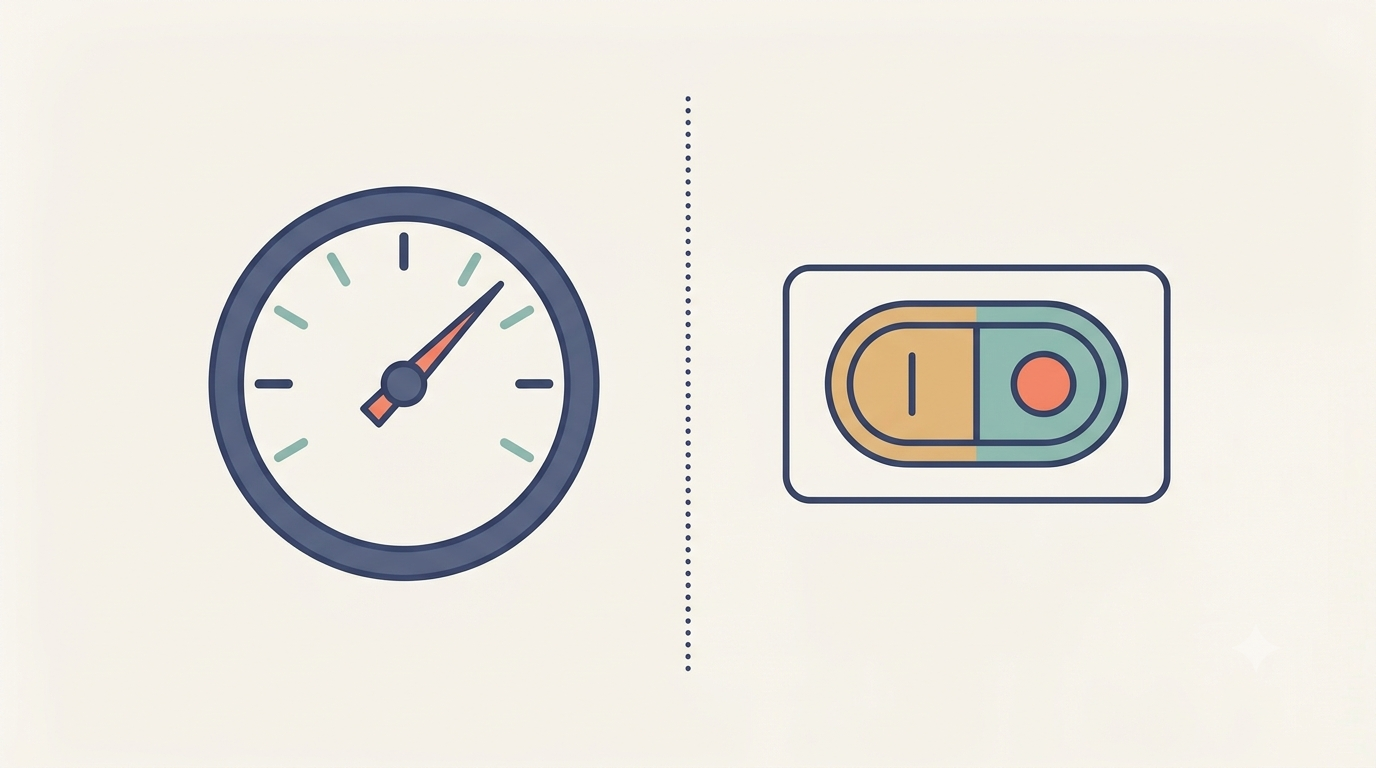
A breathalyser gives a number for how much alcohol is in the breath right now, and that number tracks intoxication closely enough that the law can draw its line at a figure.
Roadside saliva drug tests work differently. They are not a gauge. They are a switch that reports only whether something was found.
The method is to swipe a collector pad on the tongue and read the result using a technique that relies on an antibody reaction, which returns a positive when a substance is present above a set cut-off. It does not report how much is present, and it does not report how long ago the substance was taken.
"A positive says the person used recently. It does not say whether the concentration in their blood is above a legal limit."
Norway's National Forensic Toxicology Laboratory puts it plainly: oral fluid screening for drugs is a valuable tool for identifying recent drug use, but it is less suitable for detecting drivers with drug concentrations in blood above the legal limits.
That distinction matters, because different countries' laws do not ask the same question. Some ask whether the concentration in the blood exceeds a set level, which is a measurement of quantity in the same way as alcohol. Thai law asks something different, which this article comes to below.
Source: https://pmc.ncbi.nlm.nih.gov/articles/PMC12716461/
The Numbers from Real Roads in Norway
In 2023 Norwegian police used the DrugWipe 6S device on 355 drivers suspected of driving under the influence of drugs. After the roadside test the drivers were taken to a physician for a blood sample, and both the device and the blood were sent to the laboratory for analysis.
The results were these. Among positives from the roadside device, the proportion that the blood test did not confirm was 82 percent for opiates and 75 percent for cocaine, while for amphetamines, cannabis and benzodiazepines it was around 19 to 20 percent.
Looking the other way, among negatives from the device, the proportion that the blood test nonetheless found positive was around 13 to 14 percent for cannabis and benzodiazepines, and under 3 percent for the other drug groups.
One cause of unconfirmed positives is cross-reaction with substances of similar chemical structure, and sometimes with substances unrelated to the drugs being tested for. The researchers reported that many of the unconfirmed opiate positives were most likely due to cross-reaction with substances in snus, a form of moist snuff tobacco.
One point has to be stated clearly. These figures are not the sensitivity or specificity of the device. They are the proportions of results that could not be confirmed against blood. The researchers themselves warned that sensitivity and specificity calculated from this dataset carry inherent limitations, and for that reason placed them in a supplementary table rather than in the main body of the report.
Source: https://pmc.ncbi.nlm.nih.gov/articles/PMC12716461/
And Under Controlled Conditions
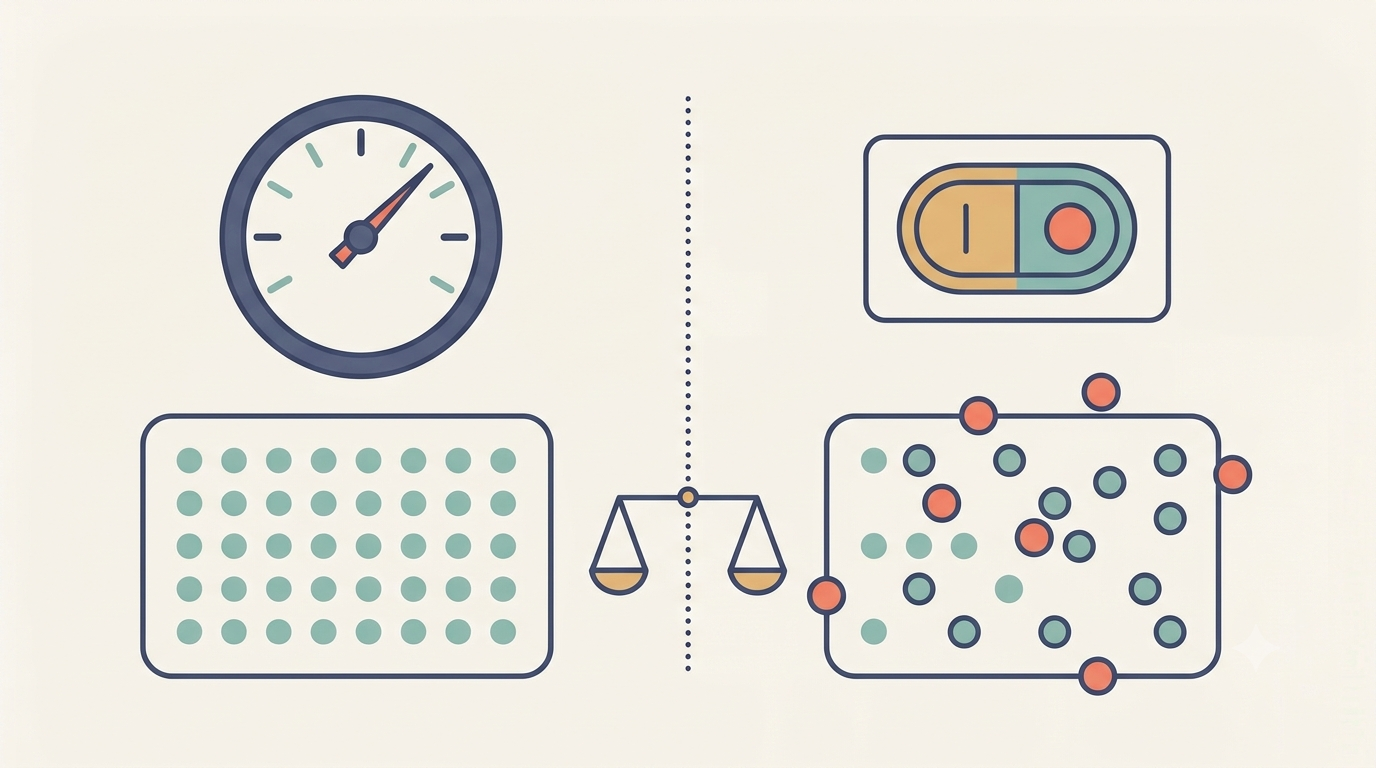
The figures from real Norwegian roads look poor, and they need to be read alongside work done under controlled conditions, which produces considerably better results.
A study by the United States National Institute on Drug Abuse tested the Dräger DrugTest 5000 for the detection of cannabinoids, at a device screening cut-off of 5 micrograms per litre.
With a confirmation cut-off of 2 micrograms per litre, the study reported diagnostic sensitivity of 90.7 percent, diagnostic specificity of 75.0 percent, and overall efficiency of 87.9 percent.
Those figures shift as the cut-off changes. At 1 microgram per litre they were 87.7 percent, 77.8 percent and 86.4 percent respectively, and at 0.5 micrograms per litre they were 86.2 percent, 75.0 percent and 84.8 percent.
What this set of numbers shows is that a device's performance is not a single fixed value. It moves with the drug class, with the make of device, and with the cut-off chosen. Anyone who states the accuracy of saliva testing as one percentage is leaving all three of those variables out.
Source: https://pmc.ncbi.nlm.nih.gov/articles/PMC3846692/
Thai Law Asks a Different Question
The point many people get wrong is that Thailand does not use saliva testing on drivers at all. The ministerial regulation issued under the Land Traffic Act sets out the method plainly, and that method is a urine test.
The regulation was published in the Royal Gazette on 10 October 2548 of the Buddhist Era, and covers the testing of drivers of certain categories of vehicle as announced by the Commissioner-General of the Royal Thai Police.
The wording worth reading closely is that the test determines whether the driver has consumed a Category 1 narcotic, specifically amphetamine or methamphetamine.
The key word is consumed. Thai law asks whether the person took the drug. It does not ask what concentration is in the blood, and it does not ask how far the ability to drive has been reduced. That is a different question from the one Norwegian law asks.
The testing structure has two stages. The first is a preliminary screen using a colour test or an immunoassay. The second is a confirmatory analysis using chromatography, which produces a far more definitive result. That two-stage structure is what makes the system trustworthy, because a preliminary result is never treated as conclusive in itself.
Source: https://www.royalthaipolice.go.th/downloads/laws/laws_03_08.pdf
Lessons for Thailand
Placing these two things side by side produces a conclusion many would not expect.
The largest limitation of saliva testing in Norwegian eyes is that it reports only recent use, rather than whether blood concentration exceeds a legal threshold. That limitation is barely a problem for Thai law, because Thai law asks only whether the person consumed the drug in the first place. The question the device can answer is precisely the question Thai law asks.
What remains for Thailand is therefore a question of accuracy alone, and the Norwegian figures show that this problem is a real one, with unconfirmed positives reaching 82 percent for opiates and 75 percent for cocaine.
Three conditions are worth setting in advance. First, if saliva testing is ever adopted, the two-stage structure Thai law already has must be kept intact: the roadside result is a screen, and confirmation by a more accurate method must come before any prosecution.
Second, the substances tested for should be chosen to match what the devices can genuinely do, because performance varies widely between drug classes. Using one device for everything and trusting every result equally invites false positives in exactly the classes where the device performs worst.
Third, do not buy on the accuracy figure the vendor supplies. Ask for independent testing that states exactly what the number measures, for which drug class, and at which cut-off, because as both studies show, the same metric moves substantially when the conditions change.
What this teaches in crime science terms is that before asking how accurate a tool is, we have to ask what question our own law is putting. A tool that answers the wrong question is useless however accurate it is, and a tool that answers the right one still needs a confirmation step before a probability is turned into an offence.
References
Milman, G., Barnes, A. J., Schwope, D. M., Schwilke, E. W., Darwin, W. D., Goodwin, R. S., Kelly, D. L., Gorelick, D. A., & Huestis, M. A. (2011). Disposition of cannabinoids in oral fluid after controlled around-the-clock oral THC administration. Clinical Chemistry, 57(8), 1127-1136. https://pmc.ncbi.nlm.nih.gov/articles/PMC3846692/
กฎกระทรวง กำหนดหลักเกณฑ์และวิธีการตรวจสอบผู้ขับขี่ซึ่งได้เสพยาเสพติดให้โทษในประเภท 1 เฉพาะแอมเฟตามีนหรือเมทแอมเฟตามีน พ.ศ. 2548. (2548, 10 ตุลาคม). ราชกิจจานุเบกษา, เล่ม 122 ตอนที่ 92 ก, หน้า 1. https://www.royalthaipolice.go.th/downloads/laws/laws_03_08.pdf
Norwegian National Forensic Toxicology Laboratory. (2025). Evaluation of DrugWipe 6S with the WipeAlyser reader for drug screening of drivers. https://pmc.ncbi.nlm.nih.gov/articles/PMC12716461/
Good knowledge should not stay in the library. It should be used to build a safer world.
Follow us at www.crimesci.com
Contact info@crimesci.com
#HubofKnowledge #CenterforCrimeScience #CrimeScienceWeekly
#วิทยาการอาชญากรรม #ยาเสพติด #นิติพิษวิทยา #RoadSafety