The Zombie Vape: An Operating-Theatre Anaesthetic That Escaped the Hospital
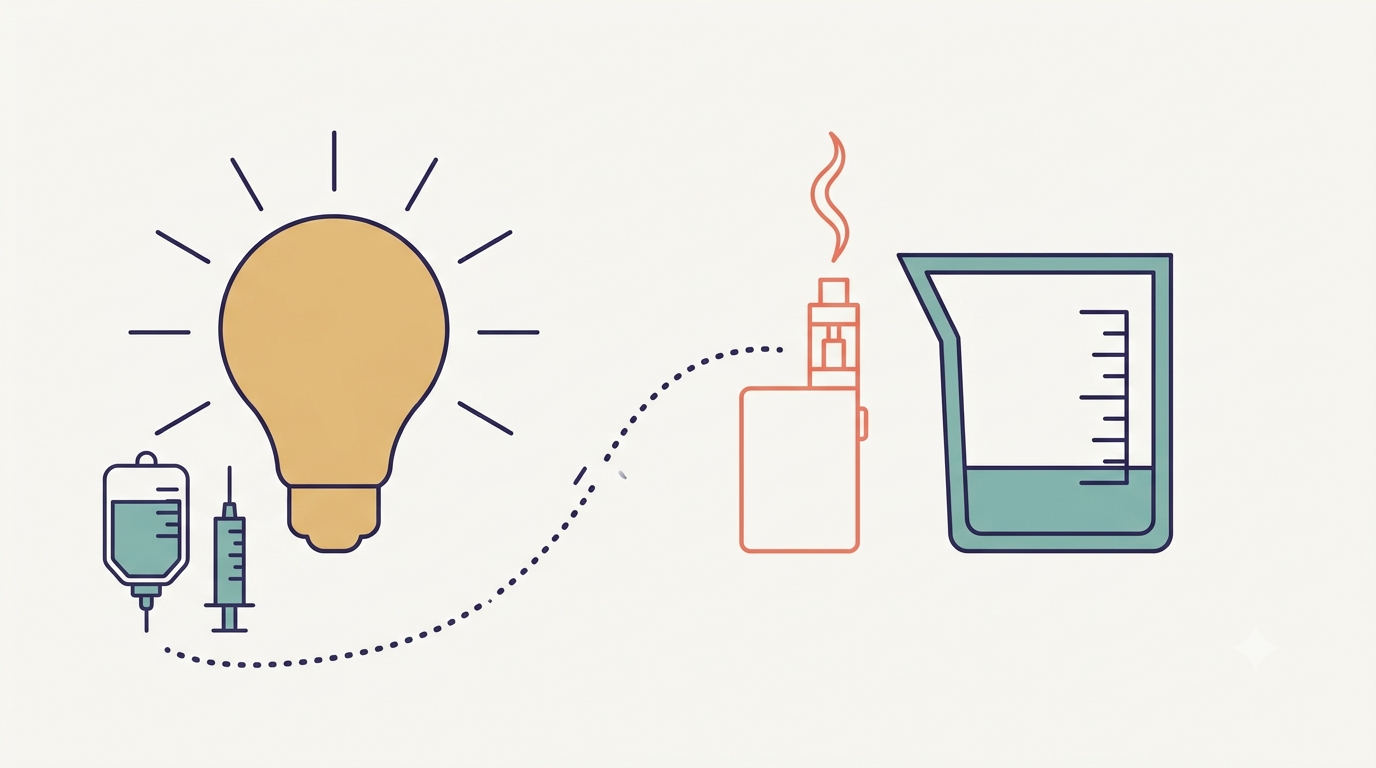
Etomidate is a pharmaceutical anaesthetic, a drug used to put patients to sleep, and one that belongs under the care of medical staff.
In the past few years, however, it has been mixed into liquid for electronic cigarettes and drawn into the lungs, a route of use nobody ever designed it for.
"A drug built so that a doctor decides who falls unconscious and when, handed to ordinary people to dose themselves."
What makes this interesting in crime science terms is that it did not appear out of nowhere. It arrived as a by-product of an enforcement measure that worked on something else.
Source: https://www.unodc.org/roseap/uploads/documents/Publications/2026/Synthetic_Drugs_in_East_and_Southeast_Asia_2026.pdf
When One Substance Was Successfully Suppressed, the Market Moved to Another
Some time earlier, China had introduced class scheduling for synthetic cannabinoids, a group of substances made in laboratories to produce effects resembling cannabis.
The 2026 report of the United Nations Office on Drugs and Crime links the two events directly, recording that the misuse of etomidate was first reported by China in 2021, following that country's class scheduling of synthetic cannabinoids, and that etomidate was found added to e-liquids for use with vaping products.
Put simply, once the earlier group of substances was banned as a whole class, sellers switched to a substance no law yet covered, and that substance was an anaesthetic in use in hospitals.
It then spread in sequence. The same report records first detection in Hong Kong and Taiwan in 2023, then first detection in Cambodia, Indonesia, Malaysia, Singapore and Thailand in 2024, followed by Japan in 2025 and Viet Nam in 2026.
The scale is clearest in Singapore. In its first year of appearing in the Singaporean market, etomidate accounted for 63.6 per cent of all analysed vape exhibits in 2024. This increased slightly to 63.8 per cent in 2025.
Source: https://www.unodc.org/roseap/uploads/documents/Publications/2026/Synthetic_Drugs_in_East_and_Southeast_Asia_2026.pdf
Thailand Has Already Acted
Thailand's Food and Drug Administration raised the control status of etomidate from a specially controlled medicine to a Psychotropic Substance of Category 2, with effect from 27 July 2568 of the Buddhist Era.
The stated reason was to prevent misuse, after a trend was observed of the substance being illicitly mixed into vape liquid in the form known as the zombie vape, which acts like a narcotic and carries a risk of the user losing consciousness, stopping breathing, or dying, particularly among young people.
The legal consequence is that a person involved with a Category 2 psychotropic substance faces up to 7 years' imprisonment and a fine of up to 700,000 baht, rising to between 1 and 15 years' imprisonment and a fine of between 100,000 and 1,500,000 baht where the act is committed for the purposes of trade.
Source: https://www.fda.moph.go.th/news/170768
Thailand is not only a destination market. The UNODC report records that the Office of the Narcotics Control Board seized an etomidate production facility in Samut Prakan province, which had been importing chemicals to manufacture the substance domestically. Seizures included 42 litres of etomidate and a further one kilogram in crystal form, along with 11.9 tons of chemicals usable for its production, and the network was found to be trafficking etomidate in three countries: Thailand, China and Viet Nam.
Source: https://www.unodc.org/roseap/uploads/documents/Publications/2026/Synthetic_Drugs_in_East_and_Southeast_Asia_2026.pdf
Happy Water Has No Fixed Recipe
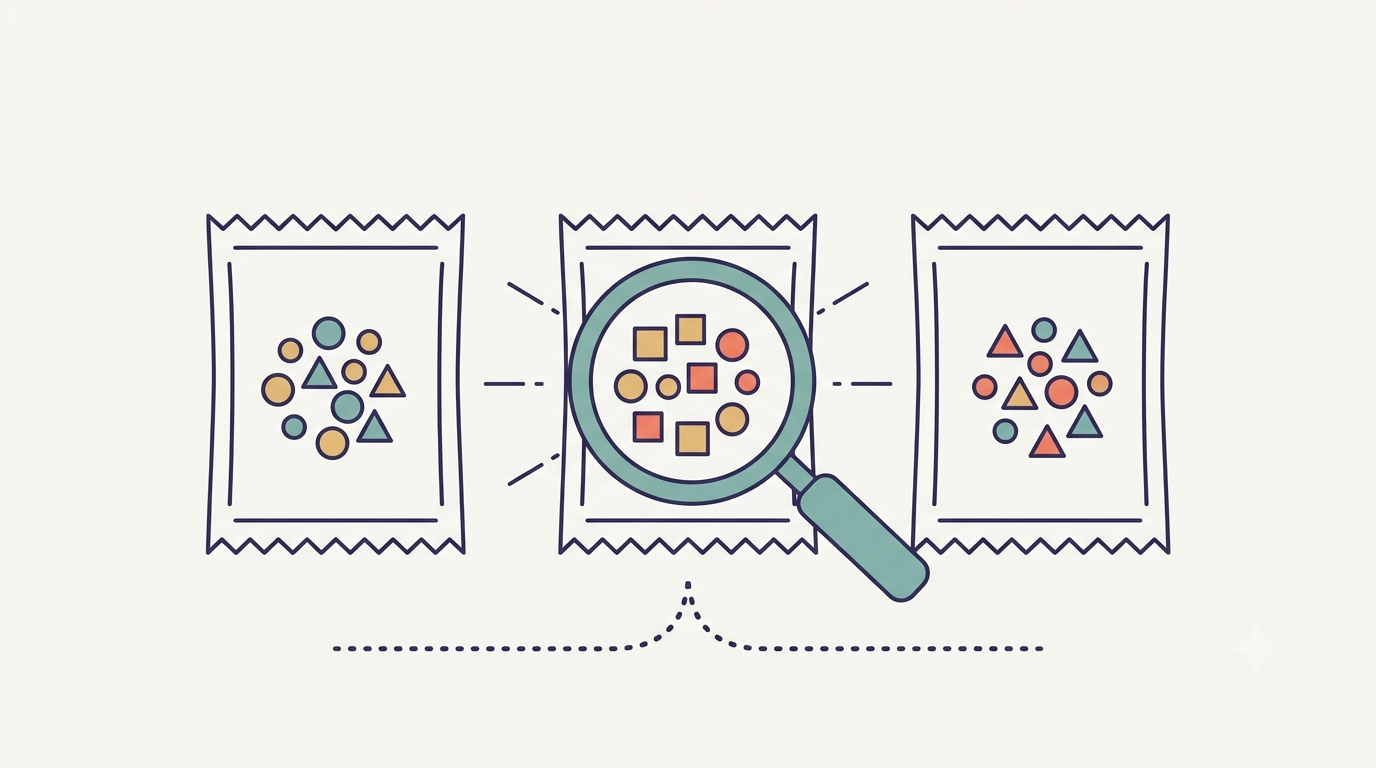
Another name heard often is happy water, commonly misunderstood as a single substance with a settled formula. The truth is the opposite.
The UNODC records that happy water remains prevalent across the region, with multiple countries continuing to report detections, often with different combinations of substances identified in each country.
For Thailand, 21 samples of happy water were analysed in 2025. MDMA, ketamine, nimetazepam and caffeine were the most commonly identified combinations, followed by methamphetamine and diazepam. Other substances found include nitrazepam, diazepam, and PMK, a direct precursor for MDMA.
The format has changed too. Happy water first emerged in the region as a powdered product in packets to be dissolved in liquids, but it has now been seized in liquid form as well, and has also been found in canned packaging.
What this tells a user is that a person buying happy water has no way of knowing what they are consuming, and no way of knowing whether the next packet will match the last one.
Source: https://www.unodc.org/roseap/uploads/documents/Publications/2026/Synthetic_Drugs_in_East_and_Southeast_Asia_2026.pdf
The Chase the Law Tends to Lose
The central difficulty with new psychoactive substances is that once one substance is controlled, manufacturers adjust the formula slightly to produce a new one the law does not yet cover.
The UNODC provides a very clear set of figures. Following regulatory control of etomidate in China in 2023, the number of etomidate analogue samples analysed in that country jumped from only two samples in 2023 to 50 samples in 2024 and 93 samples in 2025, accounting for 37.8 per cent of all analysed samples.
The shift is not only to analogues but to entirely different substances. The report records that tiletamine, another dissociative anaesthetic, has emerged in the Chinese e-liquid market as a substitute for etomidate following controls on that substance, with samples received by China's forensic laboratory rising from 35 in 2024 to 89 in 2025.
The report summarises the pattern: although legal controls on new psychoactive substances have been implemented, traffickers have adapted and sought new ways to circumvent these controls, including by turning to pharmaceutical products such as etomidate and its analogues.
Source: https://www.unodc.org/roseap/uploads/documents/Publications/2026/Synthetic_Drugs_in_East_and_Southeast_Asia_2026.pdf
Hong Kong Chose to Close the Whole Class
Hong Kong answered this problem differently. Rather than scheduling one substance at a time, the government issued an order amending the First Schedule to the Dangerous Drugs Ordinance, effective from 18 July 2025, under which all analogues of etomidate became dangerous drugs.
A government spokesperson gave the reasoning: recent scientific analysis had shown that certain analogues of etomidate may potentially be abused, and the government was therefore taking a pre-emptive step to strengthen the control of all etomidate analogues.
The penalties under that ordinance are a maximum of life imprisonment and a fine of 5 million Hong Kong dollars for trafficking and manufacturing, and a maximum of seven years' imprisonment and a fine of 1 million Hong Kong dollars for possession and consumption.
Source: https://www.info.gov.hk/gia/general/202507/16/P2025071600662.htm
Lessons for Thailand
This subject differs from many covered before, in that Thailand is not lagging behind. Etomidate has been controlled here since July 2568 of the Buddhist Era, ahead of several other countries in the region.
The question worth asking next is therefore not whether the response was late, but whether the instrument issued covers only the named substance or the whole class of analogues alongside it. The Chinese figures show plainly that analogues follow within a year of control, and rose from two samples to ninety-three within two years.
The second observation is that the origin of this problem was a side effect of a measure that worked. China successfully closed off one class of substances, and the market moved to a hospital drug instead. Effective control therefore does not mean the problem is over. It means preparing to watch for whatever arrives in its place.
The third observation concerns the public directly. A vape bought on the underground market carries no label that tells the truth, and happy water has no fixed recipe, so a user has no way of knowing what is entering their body. The risk here does not lie in the potency of a substance alone. It lies in not knowing what the substance is.
What this teaches is that controlling drugs is work that no single instrument can finish, because the other side can reformulate faster than a legislative process can follow. A system that genuinely copes needs both continuous laboratory surveillance and a legal mechanism able to close a whole class at once rather than one substance at a time.
References
Security Bureau, Government of the Hong Kong Special Administrative Region. (2025, July 16). Order to amend Dangerous Drugs Ordinance to be gazetted on July 18 with all etomidate analogues to become dangerous drugs. https://www.info.gov.hk/gia/general/202507/16/P2025071600662.htm
United Nations Office on Drugs and Crime. (2026). Synthetic drugs in East and South-East Asia: Latest developments and challenges 2026. https://www.unodc.org/roseap/uploads/documents/Publications/2026/Synthetic_Drugs_in_East_and_Southeast_Asia_2026.pdf
สำนักงานคณะกรรมการอาหารและยา. (2568, 17 กรกฎาคม). อย. ยกระดับคุมเข้มยาเอโทมิเดต เป็นวัตถุออกฤทธิ์ในประเภท 2 แก้ไขปัญหาบุหรี่ซอมบี้. https://www.fda.moph.go.th/news/170768
Good knowledge should not stay in the library. It should be used to build a safer world.
Follow us at www.crimesci.com
Contact info@crimesci.com
#HubofKnowledge #CenterforCrimeScience #CrimeScienceWeekly
#วิทยาการอาชญากรรม #บุหรี่ซอมบี้ #Etomidate #ยาเสพติดสังเคราะห์