When Chicago Switched Off Its Gunshot Sensors and Violence Did Not Rise
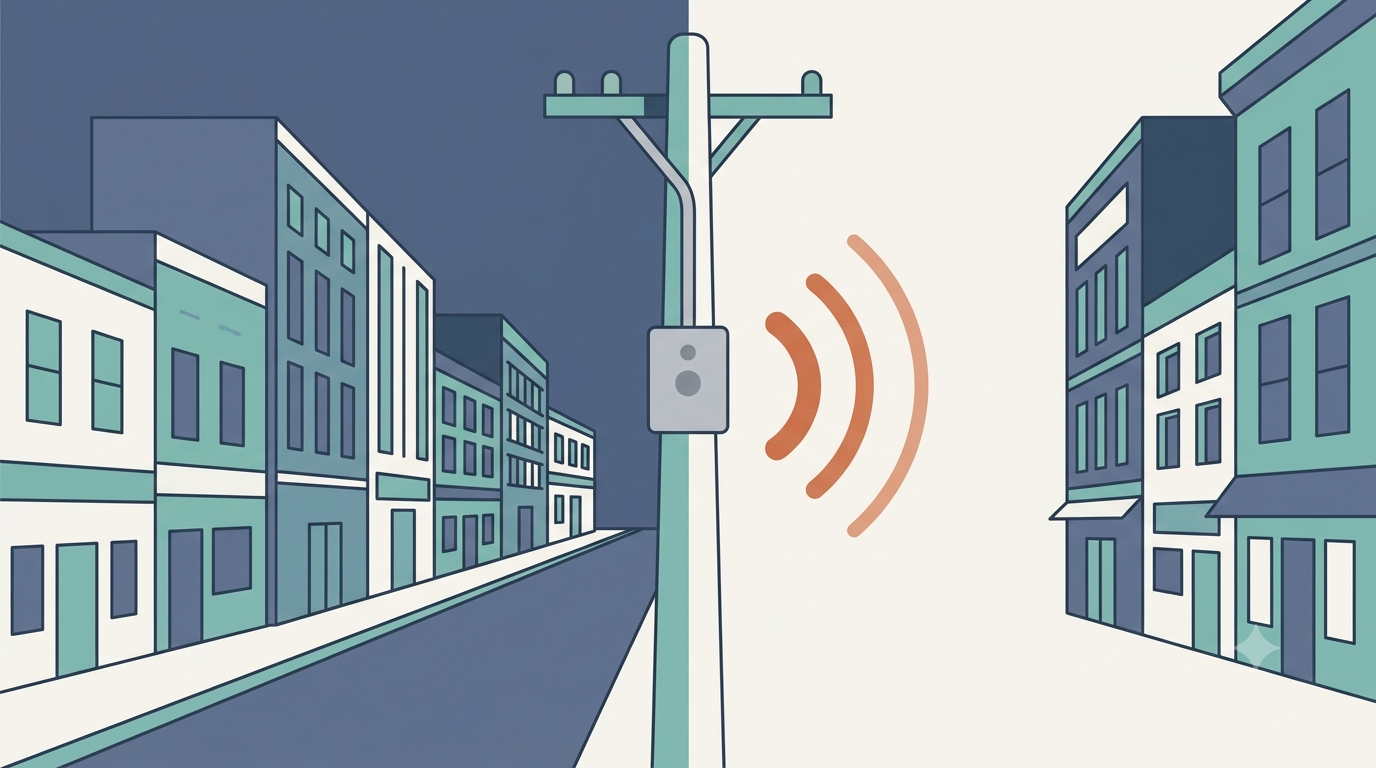
Acoustic gunshot detection is a network of microphones mounted on light poles and buildings. When several of them pick up a loud impulsive sound at the same moment, software compares how long the sound took to reach each microphone, estimates where it came from, and pushes an alert to police without waiting for anyone to call the emergency line.
Chicago ran such a system, branded ShotSpotter, for years before switching it off citywide in September 2024, against warnings that the city would be unable to cope with gun violence.
"A year later, those warnings had not come true."
Vendors advertise an accuracy figure of 97 percent. That figure answers the question: of the alerts we sent out, how many were genuine gunfire?
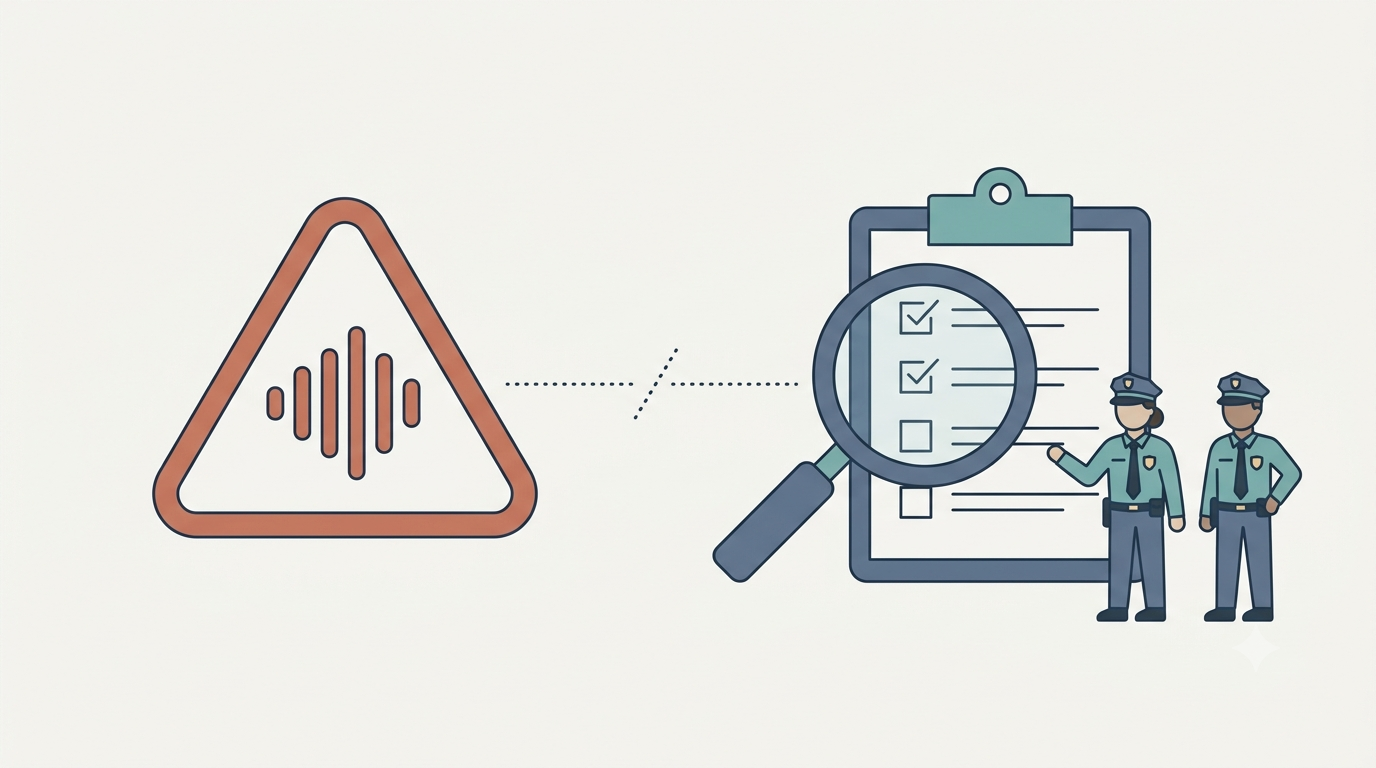
But the question policing needs answered is this: of all the alerts, how often did officers arrive and find a shooting, a victim, or evidence of a gun crime? The two questions produce very different numbers, and only the second one says whether the tool is doing any work.
Chicago's Office of Inspector General reviewed 50,176 confirmed ShotSpotter alerts between January 1, 2020 and May 31, 2021, and found that only 9.1 percent produced evidence of a gun-related criminal offence.
Source: https://igchicago.org/2021/08/24/oig-finds-that-shotspotter-alerts-rarely-lead-to-evidence-of-a-gun-related-crime-and-that-presence-of-the-technology-changes-police-behavior/
A MacArthur Justice Center study using Chicago Police Department data across 21 months pointed the same way: 89 percent of deployments turned up no gun-related crime, and 86 percent led to no report of any crime at all. One year after the sensors came down, Rob Vargas, a sociology professor at the University of Chicago, worked with David Hackett to analyse city crime data from January 1 to September 22, 2025, the exact first anniversary of the shutdown. The results were as follows.
- Police beats that had carried sensors saw homicides fall by approximately 32 percent, while homicides citywide fell by approximately 28 percent.
- On violent crime overall, the 12 South and West side neighbourhoods that had carried sensors recorded an 11.3 percent drop, against 11 percent citywide.
In short, in the areas that lost their sensors, crime did not fall any more slowly than in the rest of the city.
Source: https://news.wttw.com/2025/12/29/steep-drop-homicides-continued-full-year-after-shotspotter-was-removed-analysis
The Cost Borne by Ordinary People
A class action complaint asserts that over a six-month period Chicago police reported using physical force on at least 82 Chicagoans during ShotSpotter-prompted deployments, nearly all of them unarmed Black or Latino men.
In August 2025 the city settled that case, conceding that an alert on its own is not enough to justify stopping and searching a person.
In March 2026 the city agreed to pay 500,000 dollars to Michael Williams, who was charged with murder in 2020 on the strength of an alert from the system and spent nearly a year in jail before prosecutors dropped the case.
Source: https://www.macarthurjustice.org/case/williams-v-city-of-chicago/
Lessons for Thailand
There is no public record of an acoustic gunshot detection system in operational use anywhere in Thailand. The lesson from Chicago is therefore not a warning about a system we already run. It is an important example to hold in mind for the next procurement round.
Two questions are worth asking before any such technology is adopted.
- Do the standing orders state clearly whether a single automated alert does or does not amount to reasonable suspicion for stopping and searching a person?
- Has the agency built its own record of what officers find when they respond, because without that record there is no way to judge whether the tool was worth the money?
In short, good technology should prove itself through measurable results on the ground rather than through figures the vendor counts for itself, and asking the right questions before the signature goes on the page is a duty crime science owes the public.
References
Cherone, H. (2025, December 29). Steep drop in homicides continued for full year after ShotSpotter was removed: Analysis. WTTW News. https://news.wttw.com/2025/12/29/steep-drop-homicides-continued-full-year-after-shotspotter-was-removed-analysis
Chicago Office of Inspector General. (2021, August 24). OIG finds that ShotSpotter alerts rarely lead to evidence of a gun-related crime and that presence of the technology changes police behavior. https://igchicago.org/2021/08/24/oig-finds-that-shotspotter-alerts-rarely-lead-to-evidence-of-a-gun-related-crime-and-that-presence-of-the-technology-changes-police-behavior/
MacArthur Justice Center. (2026, May 27). Williams v. City of Chicago. https://www.macarthurjustice.org/case/williams-v-city-of-chicago/
Good knowledge should not stay in the library. It should be used to build a safer world.
Follow us at www.crimesci.com
Contact info@crimesci.com
#HubofKnowledge #CenterforCrimeScience #CrimeScienceWeekly
#วิทยาการอาชญากรรม #GunshotDetection #AIPolicing #SmartCityThailand